
Blog
- Home
- Blog
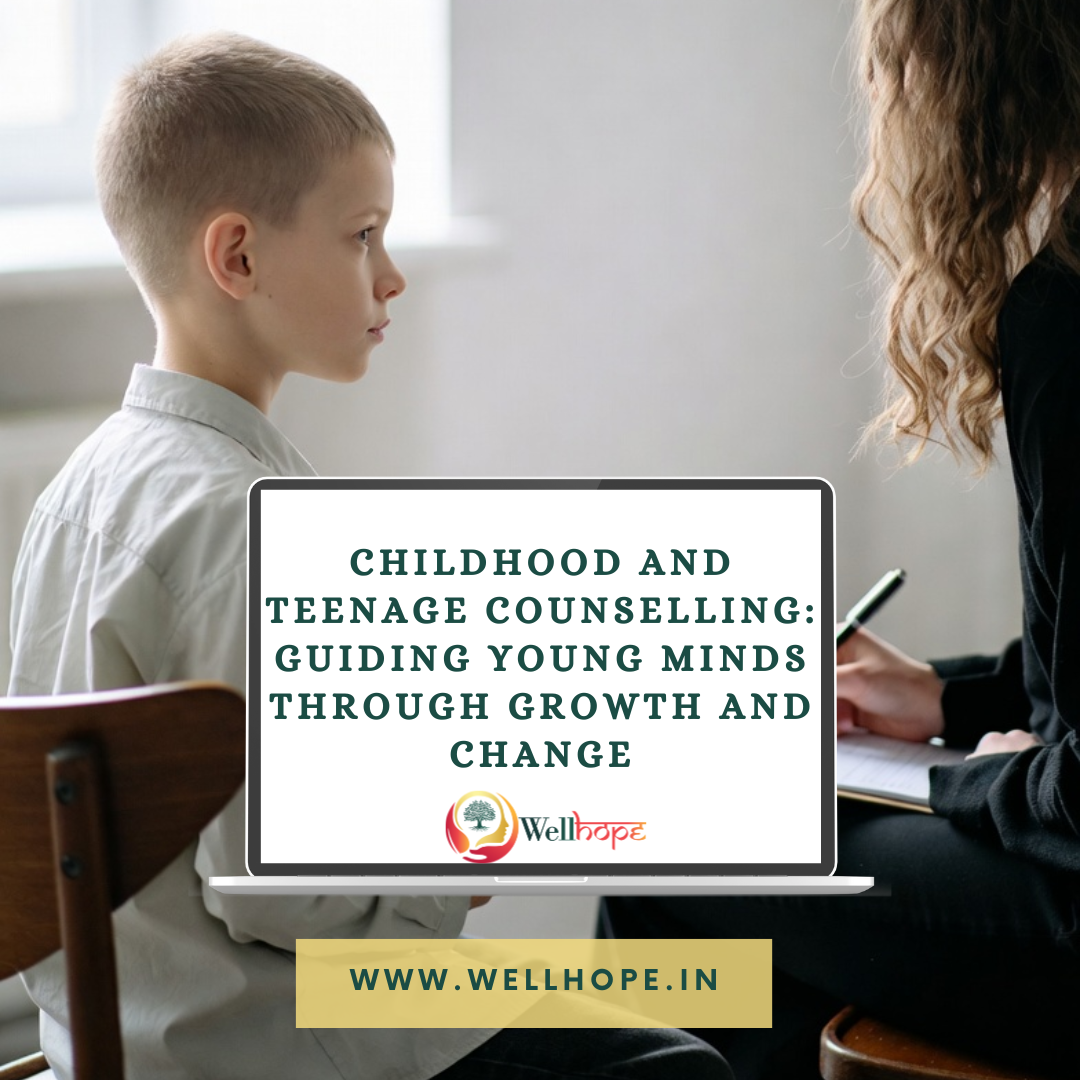
Childhood and Teenage Counselling: Guiding Young Minds Through Growth and Change
Years ago, we could track a child’s growth by simply looking at a height chart on the kitchen wall or celebrating the arrival of a first lost tooth. These were tangible, visible markers of progress. Today, however, the most important changes and the most significant challenges are happening where we can’t see them. In 2025, our children are growing up in a world that moves much faster than their minds were built to handle. This shift isn't just "hard" for them; it's a total transformation of the human experience.
When we discuss the necessity of professional support, we need to stop thinking about "fixing" a broken child. Instead, think of it as a lighthouse. Imagine a young person trying to steer a boat through a thick, heavy fog. They didn't ask for the fog, and they certainly didn't create it, but they are stuck in it nonetheless. Between the ages of seven and twenty, the human brain undergoes a massive, systemic rewrite. During these years, kids are desperately trying to figure out who they are in a world that is constantly telling them who they should be.
We often dismiss their moods as "just a phase," but these years are actually the bricks and mortar of their entire future. If that foundation is shaky now, the whole house might feel the tremors later in life. This is why more families are recognizing the profound value of childhood and teenage counselling as a proactive step rather than a last resort.
Why childhood and teenage counselling Matters Today
If you’ve ever wondered why a teenager suddenly explodes over a minor inconvenience or makes a seemingly reckless choice, the answer is usually found in their "hardware." Think of a teen’s brain like a high-performance car.
In the adolescent brain, there is a specific part called the amygdala. This is the emotional center of the mind. In a teenager, this part is like a Ferrari engine, it is incredibly fast, responsive, and powerful. It processes anger, excitement, and fear at 100 miles per hour. Simultaneously, there is the prefrontal cortex. This is the part responsible for logic, staying calm, and considering the consequences of tomorrow. This part acts like the brakes.
The biological problem? The engine is finished and ready to race, but the brakes are still being built. This development gap leads to several common experiences:
Heightened Emotionality: Feeling "everything" all at once.
- Impulsivity: Acting before the logical "brakes" can engage.
- Sensitivity to Rejection: A deep, physical need for peer acceptance.
It is, quite literally, like driving a Ferrari with bicycle brakes. Childhood and teenage counselling gives a young person the "scaffolding" they need while their brain finishes construction. It provides a safe, controlled environment where they can learn to handle high-speed emotions without crashing. A counselor doesn’t judge the driver for the speed of the engine; they help them learn how to steer until the brakes are fully installed.
Breaking the Digital Cycle with childhood and teenage counselling
We cannot talk about today’s youth without mentioning the digital landscape. For older generations, the school day ended when the bell rang. Home was a physical and emotional sanctuary from social pressure. But for today’s kids, the pressure follows them into their beds and under their covers via their smartphones.
They are stuck in what psychologists call the "comparison trap." On social media, they see everyone else’s "perfect," filtered highlights and subconsciously compare them to their own messy, real, and unfiltered lives. This creates a constant, quiet hum of anxiety—a "digital shadow" that never leaves them. They are haunted by questions like:
- "Am I enough?"
- "Why wasn't I invited to that event?"
- "Why does everyone else look happier than I feel?"
In this context, childhood and teenage counselling acts as a radical act of rebellion against the digital noise. It is often the only hour in a child's entire week where they are completely unplugged and disconnected from the grid. It’s a rare place where they can be "unpolished" and honest without fearing that someone will take a screenshot or judge them. Counselling helps them realize that their intrinsic worth isn’t measured in likes, views, or streaks, but in their own character and resilience.
Moving from Punishment to Connection
For a long time, parenting and education were centered almost entirely on discipline. If a child acted out, they were punished. We now realize, through decades of psychological research, that punishment often just teaches kids how to hide their struggles more effectively. It doesn't fix the underlying pain; it just pushes it underground where it slowly turns into resentment or deep-seated shame.
Modern therapy flips this traditional script. It views "bad" behavior as a signal rather than a problem to be suppressed. If a child is withdrawing, getting aggressive, or failing in school, we stop asking, "Why are you doing this?" and start asking, "What are you feeling that you can't put into words yet?"
When we make this shift, the child stops being a "target" for discipline and becomes an active partner in their own growth. They learn a vital life lesson: they might not be able to control every feeling that bubbles up inside them, but they can absolutely learn to control how they respond to those feelings. This self-regulation is the cornerstone of emotional intelligence.
The Secret Language of Play and Art
It is important to understand that childhood and teenage counselling for a seven-year old looks nothing like Counselling for an adult. You won't find a second-grader sitting on a leather couch talking about their "childhood trauma" in abstract terms. Instead, younger children process their world through play, which is their natural language.
In a professional session, a sand tray, a box of markers, or a set of building blocks becomes a voice.
- Drawing: If a child draws a giant, dark monster in the corner of every picture, they might be showing us their fear of a new school or a change at home.
- Roleplay: If they play out a scene with action figures, they might be practicing how to deal with a conflict they witnessed or experienced.
- Artistic Expression: Using colors and shapes to represent feelings that are too big for a seven-year-old's vocabulary.
Counselors are specifically trained to speak this "silent language." For teenagers, the language changes to "shared exploration." It’s about meeting them where they are— talking about their music, their favorite video games, or their daily frustrations—until they feel safe enough to open the heavier doors of their inner life.
Protecting yourself before things get hard
The biggest mistake we make as a society is waiting for a total "breakdown" before we look for help. We take kids for annual physical check-ups and regular dental cleanings to prevent problems; we should treat emotional health with the same preventive care.
Preventive childhood and teenage counselling is about building "emotional armor." It gives a ten-year-old the tools to identify and walk away from a toxic friendship before it damages their self-esteem. It teaches a fourteen-year-old how to use breathing techniques to navigate a panic attack before it happens during a high-stakes final exam. When we invest in these early years, we aren't just making "now" easier; we are ensuring that the adult they become is resilient, self-aware, and mentally healthy.
Ultimately, seeking guidance is an act of deep respect. It says to the child, "Your inner life matters just as much as mine, and your struggles are worthy of attention." By giving them this support, we give them the best gift possible: the ability to understand, accept, and eventually, lead themselves through whatever storms life brings. We are not just raising children; we are raising the healthy adults of tomorrow.

Leave a Comment
We would love to hear your thoughts and experiences.