
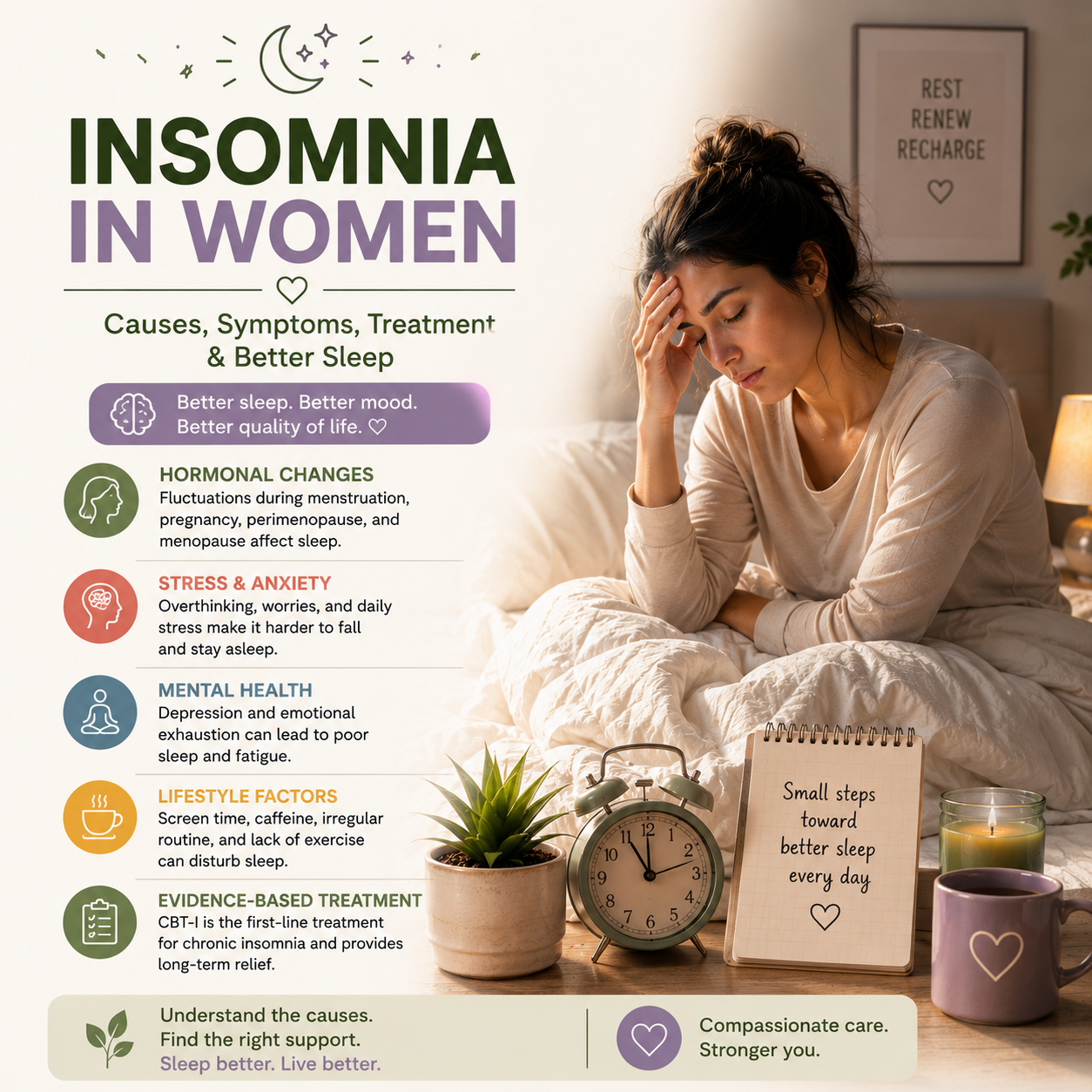
Insomnia in Women: Causes, Symptoms, Treatment & Better Sleep | Well Hope
Have you ever slept through the entire night yet still felt exhausted? Or found yourself lying awake because your mind just wouldn't stop thinking?
Insomnia in women is more common than many people realize and can affect both physical and mental health. Many women experience difficulty falling asleep, staying asleep, or waking up feeling tired even after spending enough time in bed. These sleep difficulties are often influenced by a combination of biological, psychological, and lifestyle factors, making insomnia a common but often overlooked health concern.
Introduction
In this blog, you'll learn the common causes of insomnia, why women are more likely to experience it, how sleep and mental health influence one another, and the evidence-based insomnia treatment options available. You'll also learn when to seek professional support and how Cognitive Behavioral Therapy for Insomnia (CBT-I) can help improve sleep in the long term.
Because sleep and mental health are closely connected, understanding the causes of insomnia in women is the first step toward finding the right treatment and improving overall well-being.
What Is Insomnia in Women?
Insomnia in women is a common sleep disorder that makes it problematic for people to fall and remain asleep or return to sleep after waking during the night. Because of this, even after getting sufficient sleep, a lot of individuals wake up feeling exhausted. This condition usually challenges energy levels, mood stability, and productivity which can be gained through good sleep.
There are two main types of insomnia:
- Acute insomnia is a brief condition that typically lasts a couple of days or weeks. It is often triggered by temporary stress, life changes, or environmental factors.
- Chronic insomnia lasts at least three evenings each week for a minimum of three months.
Why Is Insomnia in Women More Common?
Insomnia in women is more common because sleep is influenced by a combination of biological, psychological, and social factors. Hormonal changes throughout life, emotional strain, childcare duties, and the unseen mental load of everyday activities can all have an impact on sleep quality. Understanding these factors can help women recognize why sleep problems occur and how they can be managed effectively.
How Do Hormonal Changes Affect Sleep?
The body's normal sleep-wake cycle is mostly regulated by hormones. Hormone fluctuations might make it more difficult for a woman to fall asleep, stay asleep, and have a restful sleep. This represents one of the primary causes of the higher prevalence of insomnia in women compared to men.
- Estrogen: Supports a person's natural sleep-wake cycle and aids in controlling body temperature. Women may have more sleep problems and have a harder time getting a good night's sleep when their estrogen levels drop.
- Progesterone: Helps the body unwind before sleep and has a relaxing impact on the brain. It may be harder to fall or remain asleep when progesterone levels are down.
- Cortisol: Cortisol: The body's response to stress is influenced by cortisol, often known as the stress hormone. Elevated cortisol levels may keep the body attentive and make it challenging to unwind and fall asleep, particularly at night.
- Melatonin: The body uses this hormone to determine when it's time for sleep. The production of melatonin can be disrupted and the sleep-wake cycle disturbed by stress, unusual routines, and hormonal changes.
- Hormonal changes throughout life: Menstruation, pregnancy, the postpartum period, perimenopause, and menopause all cause hormonal changes in women. Each of these phases of life may have a short-term or long-term impact on the quality of sleep.
These hormonal changes are one of the main reasons insomnia in women is more common than in men and may occur during different stages of life.
How Do Women's Daily Responsibilities Affect Sleep?
The responsibilities that come with being a woman can have a huge impact on their sleep pattern. Apart from the hormones, most women tend to carry an invisible weight on their minds due to the continuous process of planning, remembering, organizing, and taking care of others.
- Taking care of their children, elderly individuals, and even those with illnesses in the family.
- Managing the work-related and domestic chores at once.
- Constantly planning and remembering things.
- Being emotionally attached to the health of their family members.
Over time, these ongoing responsibilities can increase stress, reduce sleep quality, and contribute to insomnia in women, even when there are no underlying physical health concerns.
Can Stress and Anxiety Cause Insomnia in Women?
Stress and anxiety are among the most common causes of insomnia in women. The hormone cortisol, which keeps the brain alert, is released by the body in response to stress. While this response is useful during the day, it can make relaxing and falling asleep much harder at night. Ongoing anxieties about career, family, financial matters, or relations might keep the mind occupied, making it difficult to fall or stay asleep.
Can Depression and Emotional Exhaustion Affect Sleep?
Sleep can be significantly affected by depression and emotional exhaustion. Individuals with depression are likely to experience difficulty getting asleep, waking frequently during the night, early awakening, or sleeping excessively without feeling rested.
Emotional exhaustion, prolonged stress, and untreated mental health concerns can make it difficult for the brain and body to relax before bedtime. In turn, insomnia contributes to mood disturbances and increased levels of stress and decreases emotional resilience. Thus, the cycle develops.
Can Lifestyle Habits Contribute to Insomnia in Women?
Lifestyle habits can also contribute to insomnia in women. While these habits may not always be the main cause, they can make existing sleep problems worse over time.
Common lifestyle factors include:
- Exposure to too many screens before bedtime can negatively affect melatonin, which is the hormone responsible for sleep.
- Consumption of excessive caffeine, especially at nighttime, can ruin the ability to go to sleep.
- An inconsistent sleep pattern, characterized by varying times when going to bed and waking up.
- Lack of exercise can have a negative impact on sleep quality and make it harder to stick to a healthy sleep routine.
It's crucial to speak with a healthcare provider to determine any underlying medical or psychological issues if sleep issues persist even after these habits are improved.
What Are the Signs of Insomnia in Women?
Insomnia in women can affect both nighttime sleep and daytime functioning. While symptoms vary from person to person, they commonly include:
- Trouble falling asleep when you’re tired
- Getting woken up frequently during the night
- Waking up early without being able to fall back to sleep
- Sleep feels unrefreshing
- Feel tired or have low energy throughout the day
- Trouble paying attention or remembering things
- Irritability or moodiness
- Feeling worried about not getting enough sleep
If these symptoms occur at least three nights a week for three months or longer and interfere with daily life, they may indicate chronic insomnia, and professional support may be helpful.
How Are Insomnia in Women and Mental Health Connected?
Sleep and mental health are related because poor sleep may affect emotional health, such as worry, stress, and sadness, making it difficult to sleep. If we look closely, we may see a cycle, in which one issue worsens another.
Can poor sleep affect mental health?
Yes. Poor sleep can affect mental health by making it harder for the brain to regulate emotions, cope with stress, and concentrate. During healthy sleep, the brain processes emotions, strengthens memories, and restores energy. When sleep is disrupted, people may feel more anxious, irritable, overwhelmed, or emotionally sensitive.
Over time, insomnia in women can increase the risk of anxiety and depression, while existing mental health conditions can make it even more difficult to sleep well.
Why does overthinking become stronger at night?
At night, there are fewer distractions, making it easier for the mind to focus on worries and unfinished thoughts. Many women find themselves thinking about work, family responsibilities, finances, health, or relationships just as they are trying to fall asleep.
This mental activity increases alertness and makes it difficult for the brain to switch into sleep mode. As a result, falling asleep becomes more challenging, even when the body feels physically tired.
Why does insomnia become a cycle?
Insomnia often becomes a cycle because poor sleep increases stress, and increased stress makes it even harder to sleep. After several sleepless nights, many people begin worrying about not getting enough sleep. This worry increases mental alertness, making it even more difficult to fall asleep the following night.
Without intervention, this cycle can continue and affect both mental health and daily functioning.
How can breaking the cycle improve sleep?
Breaking the insomnia cycle involves addressing both sleep habits and the thoughts that interfere with sleep. Small, consistent changes such as maintaining a regular sleep schedule, managing stress, and limiting stimulating activities before bedtime can gradually improve sleep quality.
For people with persistent insomnia, Cognitive Behavioral Therapy for Insomnia (CBT-I) is considered the first-line treatment. It helps identify unhelpful thoughts and behaviors that maintain insomnia and replaces them with healthier sleep habits, leading to long-term improvements in sleep and emotional well-being.
Which Options Are the Best for Insomnia Treatment?
Insomnia treatment depends on the cause, severity, and duration of the sleep problem. For many people, treatment focuses on improving sleep habits and addressing the thoughts and behaviors that interfere with sleep. Depending on individual needs, treatment may include Cognitive Behavioral Therapy for Insomnia (CBT-I), medication, or a combination of both under professional guidance.
For chronic insomnia, Cognitive Behavioral Therapy for Insomnia (CBT-I) is recommended as the first-line treatment because it addresses the underlying thoughts and behaviors that maintain insomnia.
What is Cognitive Behavioral Therapy for Insomnia (CBT-I)?
Cognitive behavioral therapy treating insomnia (CBT-I) represents a psychological technique that is supported by research. This therapy enables an individual to change their thoughts and behaviors that maintain the condition of insomnia. Unlike other therapies that help individuals get some relief from insomnia temporarily, cognitive behavioral therapy tries to achieve better sleep quality in the long term.
CBT-I is usually provided by trained psychologists or therapists who specialize in sleep and mental health.
The goals of CBT-I involve:
- Identification of thoughts and beliefs associated with increased concern regarding insomnia
- Development of healthy behaviors and practices relating to sleep
- Elimination of behaviors that impair good sleep
- Acquisition of relaxation techniques to decrease the level of arousal
- Increasing confidence in the body's capacity to have natural sleep
CBT-I is the preferred first-line treatment choice for chronic insomnia, according to studies, because it is more effective and has fewer adverse effects than medication therapy.
When Should You Seek Professional Help for Insomnia in Women?
If insomnia continues for several weeks, affects your daily routine, or starts impacting your mental health, it may be time to seek professional help. Persistent sleep problems can interfere with work, relationships, and overall well-being.
A mental health professional can identify the underlying causes of insomnia and recommend evidence-based insomnia treatment, such as Cognitive Behavioral Therapy for Insomnia (CBT-I), to help you achieve better, long-term sleep.
Conclusion
Insomnia in women is influenced by a combination of biological, psychological, and lifestyle factors. Hormonal changes, daily responsibilities, stress, and emotional well-being can all affect sleep quality. The positive thing is that there are treatments for insomnia. Healthy sleep habits and evidence-based approaches such as Cognitive Behavioral Therapy for Insomnia (CBT-I) can help improve sleep and support better mental health. Seeking support early can make it easier to restore healthy sleep and improve overall well-being.
If insomnia is affecting your daily life, relationships, or mental health, you don't have to manage it alone. At Well Hope, our mental health professionals provide compassionate, evidence-based therapy, including Cognitive Behavioral Therapy for Insomnia (CBT-I), to help you understand your sleep difficulties and build healthier, long-term sleep habits. Taking the first step toward better sleep can also be a step toward better overall well-being.
