
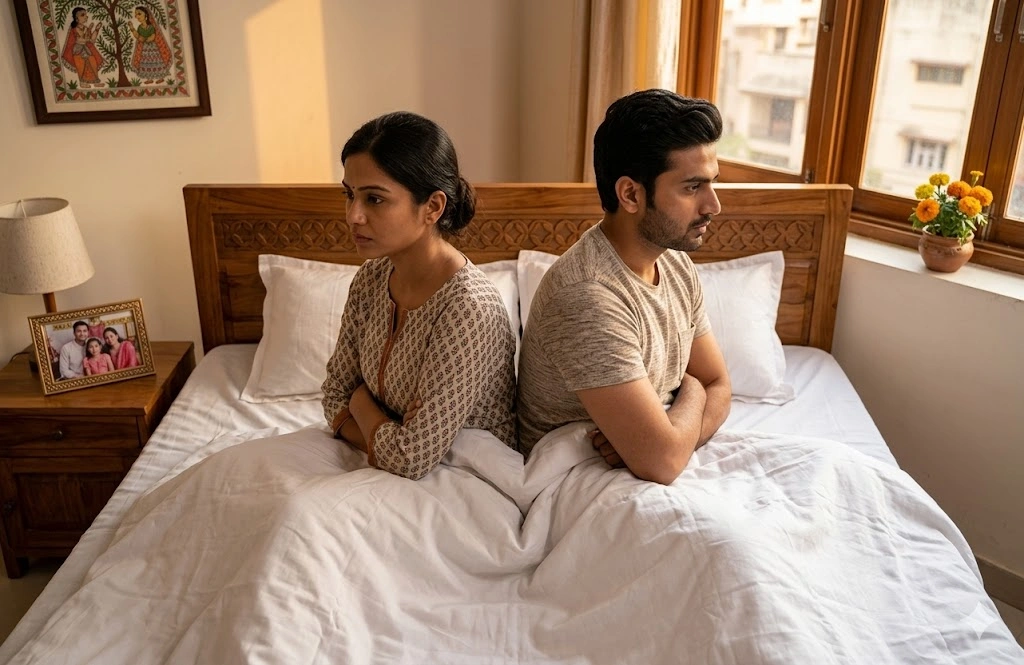
If something has been on your mind repeatedly—like anxiety, confusion, lack of desire, or dissatisfaction—it's worth talking about. You don't need a "serious problem" to go. Even "something feels off" is enough.
Confidential & Non-Judgmental Support
Sexual Health Counselling
A Modern Take on Bedside Manner: Why Sexual Health Counselling Matters

Safe & Confidential
What is Sex Therapy / Sexual Counselling?
Sex therapy is simply a safe, judgment-free space where you can talk openly about your sexual concerns with a trained professional or sexologist. It's not just about "fixing" a problem—it's about understanding what's really going on beneath the surface.
Human sexuality isn't something new or modern—it has always been a core part of human life, connection, and relationships, even in early and pre-historic societies. Across time, people have tried to understand intimacy, desire, and relationships in different ways. What's changed today is that we finally have structured, professional support—like therapy with a sexologist—to talk about it openly, without shame or myths.
A lot of sexual difficulties—like low desire, performance anxiety, or feeling disconnected—are often linked to stress, overthinking, relationship dynamics, or unrealistic expectations. A therapist or sexologist helps you make sense of these patterns in a way that actually feels relatable and not clinical.
Sessions are completely talk-based. You share what's been on your mind, the sexologist helps you understand it better, and together you figure out small, practical ways to reduce pressure, improve communication, and feel more comfortable in your own body and relationships.
And no—it's not awkward like people imagine. Most people walk in hesitant, and walk out thinking, "Oh… this actually makes sense."
What can you expect
A safe, no-judgment space guided by a therapist or sexologist, where you can talk about things you might not be able to say anywhere else like "Why don't I feel desire?" or "Why do I get anxious before intimacy?"
- Understanding what's actually going on beneath the surface, with the help of a trained sexologist who can identify emotional and behavioural patterns.
- Letting go of unrealistic expectations with guidance from a therapist or sexologist. A lot of people come in thinking something is "wrong" with them, only to realise they've been comparing themselves to myths or media portrayals.
- Learning how to communicate better- like telling your partner what feels good, what doesn't, or even saying "I'm not in the mood" without guilt or conflict.
- Small, practical exercises suggested by your therapist or sexologist that you can try in your own space. For instance, slowing things down, focusing on comfort instead of performance, or reconnecting without pressure.
- Exploring how other factors play a role- like body image ("I don't feel confident in my body"), past experiences, relationship issues, or even daily stress affecting intimacy.
- Going at your own pace. You don't have to open up all at once- sessions move as comfortably as you do.
- And just to be clear: it's completely talk-based. No physical contact, no awkward demonstrations.
End result: You feel less in your head, less pressured to "perform," and more comfortable being yourself- both alone and with a partner.
What can you not do
- It does not involve any physical contact or demonstration—everything is talk-based
- You won't be forced to share anything you're not comfortable discussing
- The therapist won't judge, shame, or impose personal beliefs on you
- It's not about being told "what's right or wrong" in your sex life—it's about what works for you
- You won't be given unrealistic promises or quick fixes—it's a gradual process
- It doesn't replace medical treatment if there's a physical health concern (you may be referred if needed)
- You won't be made to take decisions (like staying/leaving a relationship)—that choice is always yours
- It's not a space for pressure or performance expectations—rather, it reduces them
Overall, it's a space built on comfort, consent, and your pace—not control or judgment.
YOUR WELL-BEING IS OUR PRIORITY
Experience personalized care and non-judgmental support
We are dedicated to your well-being and committed to providing a personalised approach to your journey of healing. Our team of skilled psychologists and sexologists offers a holistic approach to addressing concerns related to psychological well-being, relationships, and sexual wellness.
Our sexologists and psychologists work together to ensure that every individual receives care tailored to their unique needs.
Our mission is to be there for you every step of the way. Our team of skilled psychologists offers a holistic approach to addressing a wide range of concerns, including psychological well-being, relationships, and sexual wellness. We understand that every individual is unique, and we tailor our treatments to your specific needs.
Our psychologists are experts in various domains and specialisations, encompassing behavioural, social, cognitive, and emotional concerns. We are not just here to provide emotional support; we are here to walk with you on your path to full recovery.
Trust us to be your partners in well-being, and together, we can help you find the clarity, balance, and fulfilment you deserve.
Understanding Wellness
Types of Sexual Wellness

Sexual health
This is the basic foundation- your physical and emotional safety. It's things like using protection, getting tested, and being in situations where you feel safe and respected. For example, being able to say "I'm not comfortable" and knowing it will be respected, or taking care of your body without shame.
Sexual satisfaction
This is simply: Are you actually enjoying your experiences? Not just physically, but emotionally too. Like, after intimacy, do you feel content and connected- or confused, pressured, or "that was it?"
Sexual desire
This is your level of interest in intimacy- and it's not the same every day. Some people want it often, some rarely, some not at all and all of that is normal. For example, feeling low desire when you're stressed or tired, or mismatched desire in a relationship where one partner wants it more than the other.
Sexual identity
This is about who you are and who you're attracted to. It's your personal understanding of your sexuality- whether you're straight, gay, bisexual, asexual, etc. For example, someone slowly realising "I don't feel attraction the way others do," or becoming more comfortable owning their identity over time.

Sexual communication
This is something most people struggle with. It's about being able to say things like "I like this," "I don't like that," or even "I'm not in the mood today." Without communication, people often assume—and that's where frustration builds.
Sexual pleasure
This is the experience of feeling good- physically and emotionally. It's not just about the act, but also comfort, connection, and being present instead of overthinking or performing.
Sexual wellness products
These are just tools that support comfort and safety—like condoms, lubricants, or other products. For example, using lubrication to reduce discomfort, or protection to feel safer and more relaxed.
Inclusive & Accessible
We Promote Cultural Diversity
Book your session in the following languages. Our multilingual approach breaks down communication barriers, making therapy more inclusive and deeply effective for everyone.
Hindi
English
Punjabi
Marathi
Bengali
Tamil
Malayalam
Telugu
Kannada
Gujrati
Sindhi
Issues and Challenges of Poor Sexual Wellness
Depending on a person's gender, sexual orientation, age, physical health, and other characteristics, they may confront different sexual wellness difficulties. Some issues and challenges that could arise due to poor sexual wellness management include:
- Relationship problems: Issues related to sexual intimacy and satisfaction can strain or damage relationships. Partners may feel unfulfilled, unwanted, or frustrated. This can lead to a loss of emotional closeness, affection, and trust.
- Depression and anxiety: When sexual problems persist for a long time, they can cause depression and anxiety. People may feel ashamed, inadequate, or have low self-esteem due to sexual issues.
- Physical health problems: Some sexual difficulties like pain during sex or loss of libido can be symptoms of underlying physical health conditions like hormonal imbalances, STDs, or chronic illnesses.
- Substance abuse: Some people turn to alcohol or drugs to cope with sexual problems or increase sexual desire. However, this can lead to substance abuse issues.
- Isolation: People may withdraw socially if they are ashamed of or embarrassed by their sexual difficulties. This can cause feelings of loneliness and disconnection.
- Decrease in self-esteem: Sexual problems can make people feel inadequate or flawed, damaging their sense of self and self-confidence.
- Marital discord: Unresolved sexual issues are a major cause of marital problems and divorce. Partners may feel unsatisfied, misunderstood, or feel their needs are not being met.
- Loss of intimacy: Sexual intimacy is an important part of feeling close and connected to a partner. Sexual problems can result in a loss of feelings of intimacy in the relationship.
- Risk of infidelity: When a partner's sexual needs are not being met at home, they may be tempted to seek fulfillment outside the relationship. This can lead to affairs and infidelity.
Sexual wellness is a personal and private subject, and that discussing someone's sexual wellness concerns without their permission is neither appropriate nor respectful. However, there are specific circumstances in which sexual wellness issues may have an effect on the family, including:
Infertility
Couples who are attempting to conceive may experience infertility, which can have an adverse effect on the entire family as they deal with the psychological and physical difficulties of fertility treatments.
Sexual dysfunction
When one spouse experiences sexual dysfunction, it can affect the couple's sexual connection, which can lead to stress and tension in the home.
Faced by the Person
- STIs, or sexually transmitted infections
- Sexual Dysfunction
- Painful sex
- Low libido
- Body image issues
- Anxiety and Depression
If you're having trouble with your sexual wellness, it's crucial to get help. To address these challenges, a healthcare expert or mental health specialist can offer direction and assistance.
Faced by the Family
There are specific circumstances in which sexual wellness issues may have an effect on the family, including:
- Lack of communication
- Infertility
- Sexual dysfunction
- Sexually transmitted diseases (STIs)
The coming out process or transitioning due to sexual orientation or gender identity can be difficult for people and their families as they negotiate changes in interpersonal dynamics and societal acceptability. Consulting a qualified sexologist can help in understanding these concerns in a structured and non-judgmental way.
Pricing Plans
Our Counselling Packages
Affordable and confidential therapy options tailored for you and your partner.
Individual Session
₹ 1500 / session
- No. of sessions: 01
- Duration: 60 mins
- Mode: Audio/Video (your comfort)
- Timing: Mutually fixed
- Personalize therapist
Most Popular
Couple Session
₹ 2500 / session
- Designed For: Couples
- No. of sessions: 01
- Duration: 60 mins
- Mode: Audio/Video (your comfort)
- Personalize therapist
Begin Your Sexual Wellness Journey with Well Hope
We are dedicated to your well-being and committed to providing a personalised approach to your journey of healing. Our mission is to be there for you every step of the way. Our team of skilled psychologists offers a holistic approach to addressing a wide range of concerns, including psychological well-being, relationships, and sexual wellness.
If you're looking for a trustworthy and safe space in India to help you navigate decisions, confusions or pressure, Well Hope is here for you.
Book Your Confidential Session
Common Questions
Common question you may have
"Do I even need sex therapy, or am I overthinking?"
"Will it be awkward or embarrassing?"
It might feel a little awkward in the beginning, especially because we're not used to talking about this openly. But therapists are used to these conversations—it becomes surprisingly normal, very quickly.
"What if my issue is too small or silly?"
There's no such thing here. Things like "I overthink during intimacy" or "I don't feel as interested as I used to" are actually very common reasons people seek help.
"Do I have to go with my partner?"
Not at all. You can go alone. In fact, many people start individually to understand themselves better before involving a partner (if needed).
"Will the therapist judge me?"
No—that's the opposite of their role. Whether you speak to a therapist or a sexologist, the space is meant to be neutral and accepting.
"What actually happens in a session?"
You talk, the therapist or sexologist understands patterns, and together you
work on what might help.
Mostly talking. You share what's going on,
the therapist asks questions to understand patterns, and together you figure
out what might help. Sometimes you'll get small things to try in your own
space.
"Will they tell me what to do in bed?"
Not in a directive or awkward way. It's more about helping you understand your comfort, reduce pressure, and improve connection—not giving instructions like a script.
"Is there any physical involvement?"
No. It's completely talk-based. Any exercises suggested are for you to try privately, not in session.
"What if my partner has a higher/lower sex drive than me?"
That's one of the most common concerns. Therapy helps you understand each other better and find a middle ground without blame or pressure.
"How long does it take to see change?"
It varies. Sometimes even a few sessions bring clarity and relief, especially when you start understanding what's really behind the issue.
"What if I feel nervous opening up?"
That's completely okay. You don't have to share everything at once. You go at your own pace, and comfort builds gradually.
Why should I consult a sexologist for sexual health?
A sexologist helps improve your physical, emotional, and mental well-being by addressing sexual concerns, improving relationships, and guiding you toward a healthier lifestyle.
What is sexual wellbeing according to a sexologist?
A sexologist defines sexual wellbeing as a balanced state of physical health, emotional comfort, mutual respect, and safe sexual practices.
Can a sexologist help with mental health-related sexual issues?
Yes, a sexologist can help manage stress, anxiety, depression, and trauma that affect sexual performance and confidence.
Can lifestyle changes recommended by a sexologist improve sexual health?
Yes, a sexologist often recommends exercise, healthy diet, proper sleep, and stress management to improve sexual wellness.
Who is a sexologist and what does a sexologist do?
A sexologist is a trained expert who helps individuals and couples resolve sexual health issues, intimacy concerns, and emotional challenges.
What is sexual counselling by a sexologist?
Sexual counselling by a sexologist involves guided discussions, therapy techniques, and practical solutions for sexual and relationship concerns.
What problems can a sexologist treat?
A sexologist treats issues like low libido, erectile dysfunction, premature ejaculation, painful intercourse, intimacy issues, and sexual trauma.
Can a sexologist help individuals as well as couples?
Yes, a sexologist works with both individuals and couples to improve confidence, intimacy, and communication.
How can I find the best sexologist near me?
If you are searching for a sexologist near me, WellHope connects you with certified sexologists through secure online consultations.
Is an online sexologist as effective as visiting a clinic sexologist?
Yes, consulting an online sexologist provides the same level of guidance, privacy, and effectiveness as in-person visits.
When should I consult a sexologist near me?
You should consult a sexologist near me if you experience ongoing sexual issues, relationship problems, or emotional discomfort.
Can I consult a sexologist without visiting a clinic?
Yes, you can consult a sexologist online via call, or video sessions from the comfort of your home.
What happens during a session with a sexologist?
A sexologist understands your concerns, asks relevant questions, and provides personalized guidance and therapy solutions.
How long does it take to see results from a sexologist?
Results vary, but many people notice improvement within a few sessions with a qualified sexologist.
Is consulting a sexologist confidential?
Yes, all sessions with a sexologist at WellHope are completely confidential and secure.
Why choose WellHope for a sexologist?
WellHope offers certified sexologists, affordable pricing, complete privacy, and flexible online consultations.
Overall: Most people walk in thinking "this is going to be so awkward" and walk out thinking "why didn't I do this earlier?"

Leave a Comment
We would love to hear your thoughts and experiences.