

No. Pornography use by itself does not mean that someone has an addiction. Professional assessment considers factors such as loss of control, persistence despite negative consequences, significant distress, and interference with daily functioning.
Confidential & Non-Judgmental Support
Porn Addiction Treatment: Therapy, CBT and Professional Support | Well Hope
Safe & Confidential
Porn Addiction: Understanding Problematic Porn Use and Finding Support
When pornography use becomes difficult to control or begins affecting relationships, intimacy, emotional wellbeing, or everyday life, sexual health counselling can provide a confidential and non-judgmental space to understand the underlying patterns and develop healthier coping strategies.
Online sexual health counselling can help individuals explore problematic pornography use, intimacy concerns, relationship difficulties, sexual behaviour patterns, and related emotional concerns.
Pornography is widely accessible, and viewing it does not automatically indicate an addiction or mental health problem. However, for some individuals, pornography use can become difficult to control and may begin interfering with relationships, work, studies, emotional wellbeing, or everyday life.
People may feel that they repeatedly use pornography despite wanting to reduce or stop, spend increasing amounts of time viewing it, or rely on it as a way to cope with stress, loneliness, boredom, anxiety, or difficult emotions.
When porn use becomes repetitive, difficult to control, and negatively affects important areas of life, professional support can help identify the underlying patterns and develop healthier coping strategies.
At Well Hope, therapy provides a confidential, non-judgmental environment where individuals can understand their relationship with pornography and work towards greater control and emotional wellbeing.
Problematic pornography use can sometimes be connected with broader sexual health and emotional wellbeing concerns, including intimacy difficulties, relationship conflict, sexual communication problems, anxiety, shame, or difficulty managing sexual behaviours. Sexual health counselling can help explore these concerns in a confidential and non-judgmental setting.
What to Look For
Signs of Porn Addiction
There is no single behaviour that determines whether someone has a porn addiction. What matters is the overall pattern, including loss of control, persistent use despite negative consequences, and significant distress or interference with daily life. Some possible signs include:
- Repeatedly trying to reduce or stop pornography use but struggling to do so
- Spending more time viewing pornography than intended
- Frequently thinking about pornography or planning when to view it
- Using pornography to cope with stress, loneliness, boredom, anxiety, or difficult emotions
- Neglecting responsibilities, studies, work, sleep, or social activities because of pornography use
- Continuing to use pornography despite relationship or personal consequences
- Feeling guilt, shame, frustration, or distress after viewing pornography
- Needing increasingly frequent or prolonged use to achieve the desired effect
- Choosing pornography over other meaningful activities or forms of connection
- Experiencing difficulty controlling urges in situations where viewing pornography is inappropriate
Having one of these experiences does not automatically mean that a person has an addiction. A mental health professional can help assess whether the behaviour represents problematic or compulsive use and understand what may be maintaining it.
Inclusive & Accessible
We Promote Cultural Diversity
Book your session in the following languages. Our multilingual approach breaks down communication barriers, making therapy more inclusive and deeply effective for everyone.
Hindi
English
Punjabi
Marathi
Bengali
Tamil
Malayalam
Telugu
Kannada
Gujrati
Sindhi
Root Causes
What Causes Porn Addiction?
Problematic pornography use can develop for different reasons, and there is rarely one single cause. Some contributing factors may include:
Emotional Coping
Pornography may temporarily provide relief from stress, loneliness, anxiety, sadness, frustration, or emotional discomfort. When this becomes a repeated coping strategy, a person may increasingly rely on it whenever difficult emotions arise.
Habit and Reinforcement
Repeated behaviours can become strongly associated with particular situations, emotions, or environments - someone may automatically turn to pornography when alone, stressed, bored, or unable to sleep.
Easy Accessibility
The privacy, availability, and accessibility of online pornography can make repeated use easier and may reinforce an established habit.
Relationship Difficulties
Emotional disconnection, loneliness, intimacy concerns, or unresolved relationship conflicts can sometimes contribute to increased pornography use.
Stress and Mental Health Concerns
Anxiety, low mood, loneliness, difficulties with self-esteem, or other psychological concerns may contribute to using pornography as a form of emotional escape.
Understanding the function of pornography in a person's life is an important part of treatment. Rather than focusing only on stopping the behaviour, therapy can explore what the behaviour is helping the individual manage or avoid.
Beyond the Individual
Porn Addiction and Relationships
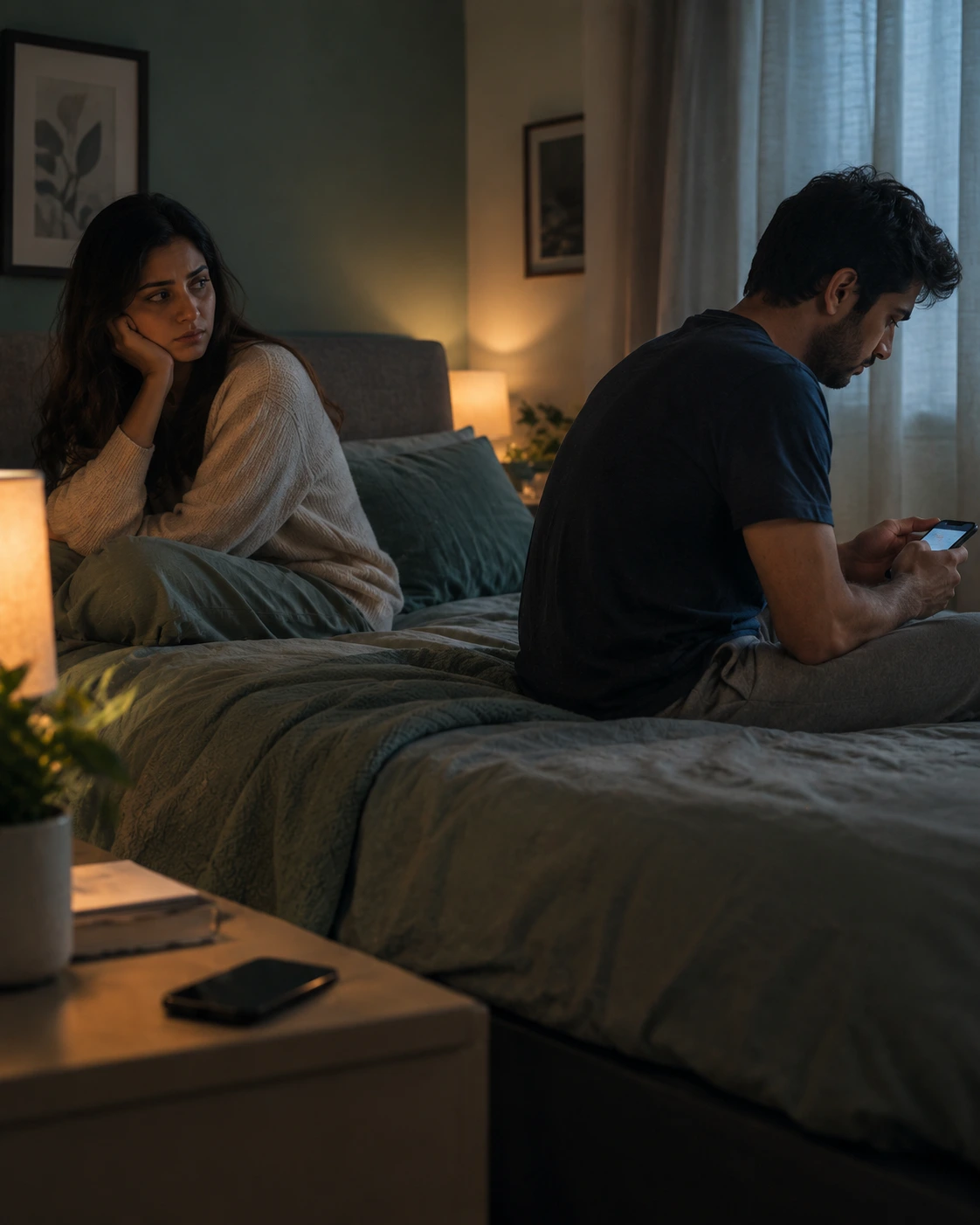
Problematic pornography use can affect romantic relationships in different ways. The impact depends on factors such as frequency of use, secrecy, personal values, relationship expectations, and how the behaviour is affecting intimacy and communication.
Some individuals may hide their pornography use because of guilt or fear of judgment. This secrecy can contribute to mistrust and emotional distance between partners. Partners may also experience concerns related to:
- Feeling rejected or emotionally disconnected
- Comparing themselves with pornography
- Differences in expectations around pornography
- Reduced interest in partnered intimacy
- Difficulty communicating about sexual preferences and boundaries
- Conflict surrounding frequency or secrecy of pornography use
- Feelings of betrayal or insecurity
It is important to recognise that pornography use does not affect every relationship in the same way. For some couples, the primary concern may be secrecy; for others, it may be compulsive use, intimacy difficulties, or differences in personal boundaries. Counselling can help partners communicate openly about their expectations and understand the emotional and behavioural patterns involved.
Evidence-Based
Cognitive Behavioural Therapy (CBT) for Porn Addiction
Cognitive Behavioral Therapy (CBT) for porn addiction focuses on the connection between thoughts, emotions, urges, and behaviours. For example, an individual may experience stress and think, "Pornography is the only thing that will help me relax." This thought may increase the urge to view pornography, followed by temporary relief and eventually guilt or frustration. CBT can help identify this cycle and develop alternative responses.
CBT may focus on:
- Identifying triggers and high-risk situations
- Recognising thoughts that increase urges
- Challenging unhelpful thinking patterns
- Developing healthier coping strategies
- Learning techniques to manage urges
- Reducing avoidance and emotional dependence on pornography
- Building routines that support behavioural change
- Addressing guilt, shame, and negative self-beliefs
The goal is not simply to suppress thoughts about pornography. Instead, therapy aims to help individuals understand their behavioural patterns and develop greater flexibility and control.
Evidence-Based
Acceptance and Commitment Therapy (ACT) for Porn Addiction
Acceptance and Commitment Therapy (ACT) for Porn Addiction takes a different but complementary approach. Instead of making the elimination of unwanted thoughts or urges the primary goal, ACT focuses on changing how an individual responds to those internal experiences. An individual may learn to notice an urge without automatically acting on it. This can involve developing psychological flexibility, accepting uncomfortable emotions, and making choices based on personal values rather than immediate urges.
ACT may help individuals:
- Observe urges without automatically responding to them
- Develop greater awareness of thoughts and emotions
- Reduce the struggle with unwanted internal experiences
- Clarify personal values and priorities
- Build behaviours that align with those values
- Develop healthier responses to difficult emotions
- Increase psychological flexibility
For example, someone may recognise an urge to view pornography while feeling lonely. Instead of immediately acting on the urge, they may learn to acknowledge the feeling, allow the urge to pass, and choose an action that aligns more closely with their values, such as contacting a friend or engaging in a meaningful activity.
Flexible & Accessible
Online Sex Therapy for Problematic Porn Use
Online sex therapy can provide a private and supportive environment for individuals experiencing concerns related to pornography use, sexual behaviour, intimacy, or sexual relationships.
A sex therapist online can help you understand behavioural patterns, emotional triggers, relationship concerns, and difficulties related to sexual wellbeing. Depending on your needs, online sexual therapy may include approaches such as CBT, ACT, relationship-focused interventions, and other appropriate therapeutic strategies.
If you are looking for a sex therapist online in India, Well Hope provides confidential online sexual health counselling for individuals experiencing concerns related to pornography use, intimacy, sexual wellbeing, and relationships.
When Should You Consider Therapy?
You may benefit from professional support if pornography use:
- Feels difficult to control
- Interferes with work, studies, sleep, or responsibilities
- Creates repeated relationship conflicts
- Is being used primarily to escape difficult emotions
- Causes persistent distress or shame
- Interferes with intimacy or sexual relationships
- Continues despite repeated attempts to change
Seeking therapy does not mean that you should feel ashamed of your behaviour. It provides an opportunity to understand the pattern without judgment and develop healthier ways of responding to urges and emotions.
How Well Hope Can Help
At Well Hope, sexual health counselling provides a confidential, non-judgmental space to discuss concerns related to problematic pornography use, sexual behaviour, intimacy, relationships, and emotional wellbeing.
You can connect with a trained therapist online and explore your concerns from the comfort of your own space. Depending on your needs, therapy may include CBT (Cognitive Behavioral Therapy), ACT, relationship-focused interventions, and practical coping strategies.
The focus is not on shame or punishment. Instead, therapy aims to help individuals understand their behaviour, regain a sense of control, strengthen their emotional coping skills, and build a lifestyle that is more consistent with their personal values.
Ready to Take the First Step?
If pornography use feels difficult to control or is affecting your relationships, emotional wellbeing, or sexual health, you don't have to manage it alone.
Well Hope provides confidential online sexual health counselling with trained mental health professionals who can help you understand your patterns and work toward healthier coping strategies.
Book Your Confidential Session
Common Questions
Frequently Asked Questions
Is watching porn automatically an addiction?
Can porn addiction affect relationships?
Problematic pornography use can sometimes contribute to secrecy, mistrust, emotional distance, intimacy difficulties, or recurring conflicts. The impact varies between individuals and couples.
Why do I keep watching porn even when I want to stop?
Repeated pornography use may become connected with emotional triggers, habits, environmental cues, or learned coping patterns. Therapy can help identify what maintains the behaviour and develop alternative responses.
Can CBT help with porn addiction?
Yes. CBT can help individuals understand triggers, identify thoughts associated with urges, develop healthier coping strategies, and change behavioural patterns that contribute to problematic pornography use.
How does ACT help with porn addiction?
ACT can help individuals develop psychological flexibility by learning to experience urges and uncomfortable emotions without automatically acting on them. It also focuses on making choices that align with personal values.
How long does it take to overcome porn addiction?
There is no fixed timeline. Progress depends on the individual's patterns of use, underlying concerns, motivation, support system, and therapeutic needs. Sustainable change is usually a gradual process.
Should I stop watching pornography completely?
That depends on your individual goals, values, circumstances, and the nature of the problem. A mental health professional can help you determine an appropriate and realistic treatment goal rather than applying a one-size-fits-all approach.
Can I get help for problematic porn use confidentially?
Yes. Discussing sexual behaviour can feel uncomfortable, but therapy provides a confidential and non-judgmental environment to explore these concerns and work towards meaningful change.
Is sexual health counselling available online?
Yes. Sexual health counselling can be provided online for a range of concerns, including sexual behaviour, intimacy difficulties, relationship concerns, sexual communication, and problematic porn use. Online counselling allows you to discuss sensitive concerns privately with a trained professional.
Can I find a sex therapist near me through Well Hope?
Well Hope can help you connect with trained professionals for sexual health and relationship concerns. If you are searching for a sex therapist near me, online sessions can also provide access to professional support without requiring you to visit a clinic physically.
Therapy is not about shame or punishment - it's about regaining a sense of control and building a life that reflects your values.

Leave a Comment
We would love to hear your thoughts and experiences.