

Eating disorders are mental health conditions involving persistent difficulties with eating, food, body image, weight, or related thoughts and behaviours. They can affect emotional wellbeing and, in some cases, physical health.
Confidential & Non-Judgmental Support
Eating Disorder Counselling: Understanding, Support and Recovery | Well Hope
Safe & Confidential
Eating Disorders: Understanding, Support and Recovery
Eating disorders are complex mental health conditions that can affect a person's relationship with food, eating, body image, and self-worth. They are not simply about food, appearance, or willpower. A person may experience restrictive eating, binge eating, compensatory behaviours, intense concerns about weight or appearance, or ongoing distress around eating.
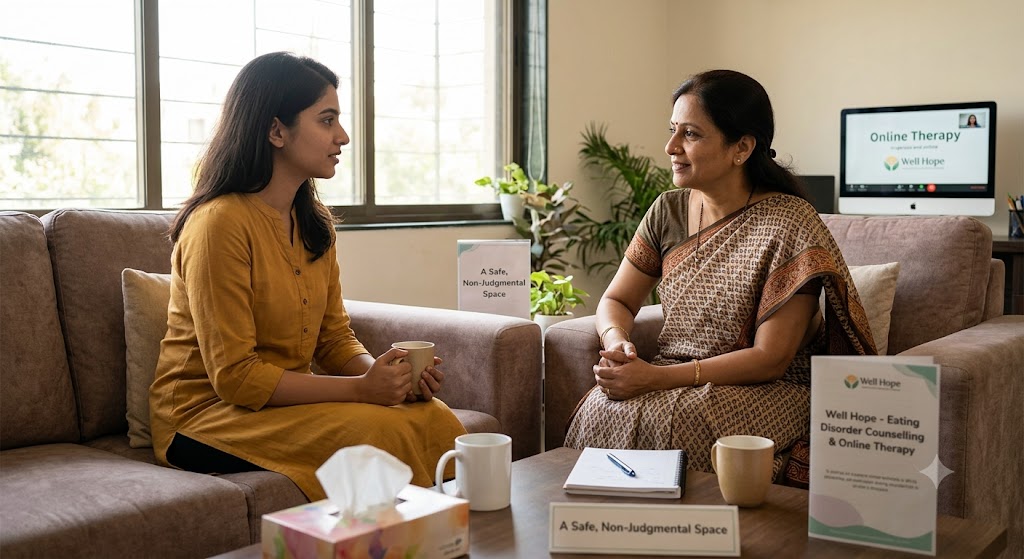
Eating disorder counselling and therapy can provide a supportive space to understand the emotional and psychological factors connected with disordered eating. At Well Hope, counselling offers a compassionate and non-judgmental environment where individuals can explore concerns around food, body image, self-esteem, emotions, and eating behaviours.
Support is different for everyone, and depending on the individual's symptoms and physical health, psychological counselling may be coordinated with appropriate medical and nutritional care.
Understanding the Condition
What Are Eating Disorders?
Eating disorders are mental health conditions involving persistent difficulties with eating, food, body image, weight, or related thoughts and behaviours. They can cause emotional distress and may affect physical health, relationships, and everyday functioning.
Eating disorders can look different from person to person. Some individuals may restrict their food intake, while others may experience episodes of binge eating or become caught in cycles involving binge eating and compensatory behaviours.
Common concerns may include:
- Persistent dissatisfaction with body image
- Intense fear of gaining weight
- Restricting food or avoiding certain foods
- Episodes of binge eating
- Feeling distressed or out of control around eating
- Excessive preoccupation with weight, food, or appearance
- Feelings of guilt or shame after eating
- Compensatory behaviours
- Difficulty eating comfortably in social situations
Eating disorders can affect people of different ages, genders, body sizes, and backgrounds. They are not always visible from a person's appearance or body size.
Professional Support
Eating Disorder Counselling
Eating disorder counselling provides psychological support for people experiencing difficulties with eating, food, body image, weight-related thoughts, or self-worth. Counselling can help you understand the thoughts, emotions, and behavioural patterns connected with disordered eating.
Depending on your individual concerns, therapy may focus on:
- Understanding patterns of disordered eating
- Exploring emotional triggers related to eating
- Identifying unhelpful thoughts about food, weight, and appearance
- Working with shame, guilt, and self-criticism
- Developing healthier ways to manage difficult emotions
- Exploring body image and self-esteem concerns
- Building more flexible and balanced coping strategies
- Understanding patterns that may contribute to recurring eating difficulties
The approach used in therapy depends on the individual's concerns, symptoms, and overall needs. For some people, psychological support may also need to be coordinated with medical and nutritional professionals.
Binge Eating Support
Binge Eating Therapy and Counselling
Binge eating involves episodes of eating an unusually large amount of food accompanied by a sense of losing control over eating. A person may subsequently experience distress, guilt, shame, or self-criticism.
Binge eating is not simply a lack of willpower. Emotional distress, restrictive eating patterns, difficult thoughts about food, stress, and other psychological factors may contribute to the cycle.
Binge eating therapy can help individuals explore the emotional and behavioural patterns associated with binge eating and develop healthier ways of coping with difficult emotions and triggers.
Inclusive & Accessible
We Promote Cultural Diversity
Book your session in the following languages. Our multilingual approach breaks down communication barriers, making therapy more inclusive and deeply effective for everyone.
Hindi
English
Punjabi
Marathi
Bengali
Tamil
Malayalam
Telugu
Kannada
Gujrati
Sindhi
Recovery
Eating Disorder Recovery Therapy
Eating disorder recovery therapy is not about achieving a particular body size or following another restrictive diet. Recovery involves developing a healthier and more flexible relationship with food, eating, emotions, and body image.
Therapeutic support may help you:
- Understand patterns that maintain disordered eating
- Recognise emotional triggers
- Challenge harmful beliefs about food and appearance
- Reduce shame and self-criticism
- Develop healthier emotional coping strategies
- Improve self-esteem and body acceptance
- Work toward sustainable behavioural changes
Recovery is a process, and progress may not always happen in a straight line. Seeking appropriate support can make the process more manageable.
Psychological Support
Anorexia Counselling Online
Anorexia counselling online can provide psychological support to individuals experiencing restrictive eating, intense concerns about weight or body image, or fear surrounding weight gain.
Therapy can explore the thoughts, emotions, beliefs, and experiences associated with restrictive eating and body image concerns.
However, anorexia can involve significant physical health risks. Psychological counselling should therefore be part of appropriate multidisciplinary care when necessary, including medical and nutritional assessment. Online counselling should not replace medical care when someone is medically unstable or experiencing serious physical symptoms.
Bulimia Support
Bulimia Therapy and Counselling
Bulimia therapy can help individuals understand and address cycles involving binge eating and compensatory behaviours.
Therapy may explore the thoughts and emotions that occur before and after these episodes, while working toward healthier ways of coping with distress and developing a more balanced relationship with food.
Because bulimia can also have significant physical consequences, professional assessment and appropriate medical support may be important alongside psychological therapy.
Body Image
Body Image Counselling and Eating Disorders
Body image concerns can play an important role in some eating difficulties. Constant comparison, negative self-talk, unrealistic appearance standards, and feeling that self-worth depends on physical appearance can contribute to emotional distress.
Body image counselling can provide a space to explore these thoughts and develop a broader sense of identity and self-worth that is not solely based on appearance, weight, or eating behaviour.
Therapy may also help you recognise patterns of comparison, self-criticism, and appearance-related distress and develop healthier ways of relating to yourself and your body.
How It Helps
How Can Eating Disorder Counselling Help?
Eating disorder counselling can help individuals better understand the emotional, psychological, and behavioural patterns connected with disordered eating.
Depending on the person's needs, therapy may help with:
- Understanding triggers and recurring eating patterns
- Exploring thoughts and beliefs around food, weight, and appearance
- Working through guilt, shame, and self-criticism
- Developing healthier ways to cope with stress and difficult emotions
- Addressing body image and self-esteem concerns
- Reducing unhelpful patterns of avoidance or emotional coping
- Developing more flexible and sustainable coping strategies
- Supporting progress toward recovery alongside appropriate professional care
The goals and approach of therapy vary from person to person. Eating disorder treatment may involve coordination between mental health, medical, and nutritional professionals when appropriate.
When to Reach Out
When Should You Seek Help?
Consider reaching out to a qualified professional if you notice:
- Persistent restriction of food
- Recurrent binge eating
- Compensatory behaviours
- Intense fear or distress around eating
- Significant preoccupation with weight or appearance
- Avoidance of meals or eating with others
- Persistent guilt or shame around food
- Eating patterns that are affecting your physical or emotional well-being
You do not need to wait until your symptoms become severe to seek support.
Well Hope Support
Support for Eating Disorder Recovery at Well Hope
At Well Hope, we understand that concerns around food and body image can be deeply personal. Counselling can provide a compassionate space to understand what you are experiencing without judgment.
For eating disorders, psychological support may need to be coordinated with medical and nutritional professionals depending on the individual's needs.
If there are signs of significant physical risk, urgent medical assessment should take priority.
Recovery is possible, and asking for help is a meaningful first step.
Take the First Step Toward Support
Concerns around food and body image can feel isolating, but you do not have to face them alone. Well Hope offers a compassionate and non-judgmental space where you can talk openly about what you are experiencing.
You are more than your relationship with food, your body, or your appearance.
Book Your Confidential Session
Common Questions
Frequently Asked Questions About Eating Disorder Counselling
What are eating disorders?
Can therapy help with eating disorders?
Therapy can provide psychological support for people experiencing eating-related difficulties, body image concerns, emotional distress, and disordered eating patterns. The appropriate treatment approach depends on the individual's symptoms and needs.
What happens in eating disorder counselling?
Eating disorder counselling may involve exploring thoughts, emotions, triggers, eating patterns, body image concerns, self-esteem, and coping strategies. The focus of therapy depends on the individual's circumstances and treatment needs.
Can I get eating disorder therapy online?
Online eating disorder therapy may be an option for some individuals. However, the appropriate level of care depends on the person's symptoms and physical health. Online counselling should not replace medical assessment when there are significant physical health concerns.
Can counselling help with binge eating?
Binge eating therapy can help individuals explore emotional and behavioural patterns associated with binge eating and develop healthier ways of responding to difficult emotions and triggers.
Can counselling help with body image concerns?
Counselling can provide a supportive space to explore negative body image, appearance-related self-criticism, comparison, and concerns about self-worth.
When should I seek help for an eating disorder?
Consider seeking professional support when eating patterns, food-related thoughts, body image concerns, or compensatory behaviours are causing distress or affecting your physical or emotional wellbeing. You do not need to wait until symptoms become severe.
Does eating disorder treatment involve other professionals?
Depending on the individual's symptoms and physical health, eating disorder care may involve coordination between mental health professionals, medical professionals, and nutrition professionals.
You are more than your relationship with food, your body, or your appearance.

Leave a Comment
We would love to hear your thoughts and experiences.