
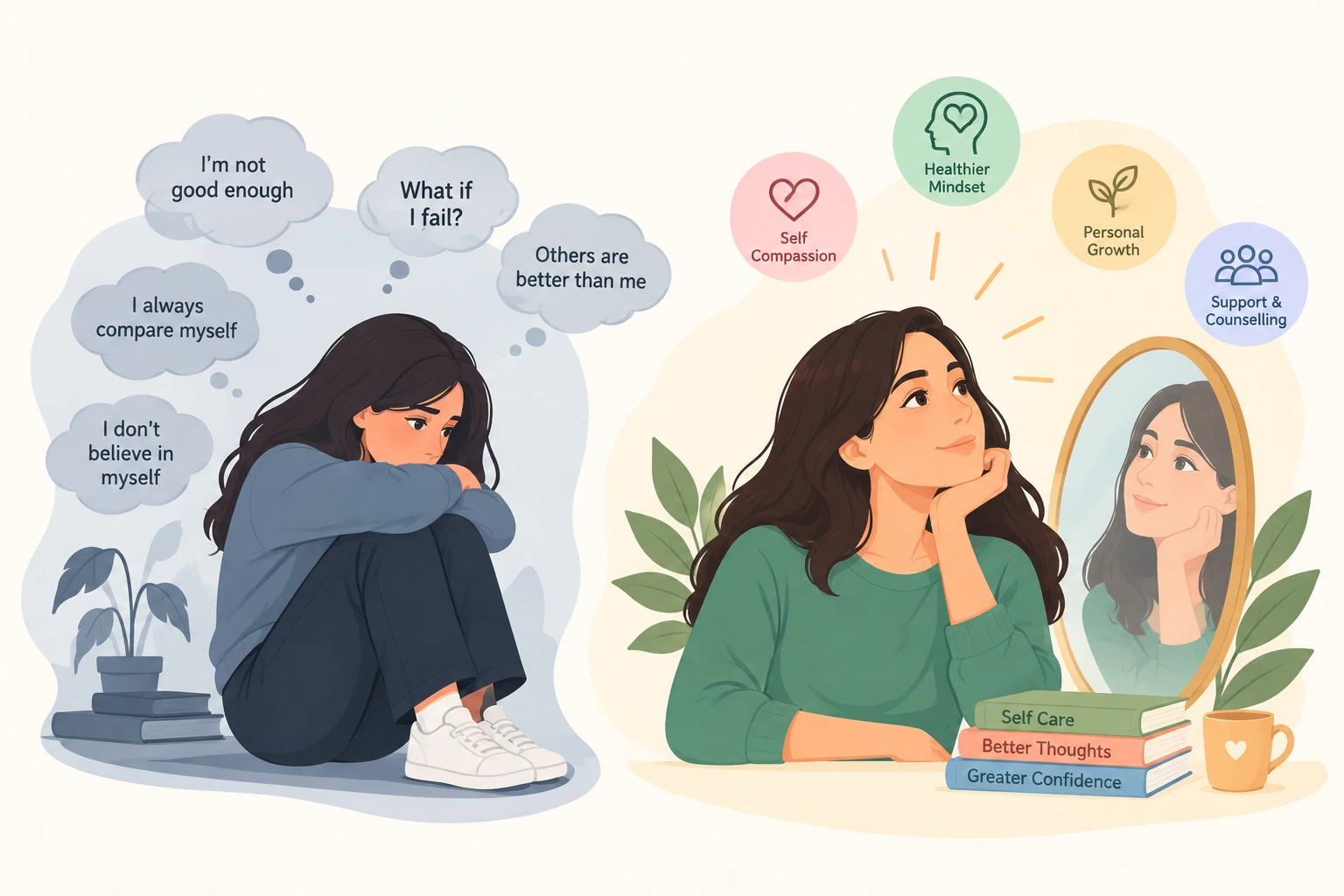
The symptoms of low self-esteem can include constant self-doubt, fear of failure, comparing yourself to others, difficulty accepting compliments, people-pleasing, perfectionism, and avoiding challenges. Some people may also experience anxiety, low motivation, or struggle to recognize their own strengths.
Confidential & Non-Judgmental Support
Low Self-Esteem: Why You Doubt Yourself
And How to Build Lasting Confidence
Safe & Confidential
What Is Low Self-Esteem?
Have you ever felt like you're not good enough, even when others appreciate your efforts? Do you often compare yourself to others, fear making mistakes, or find it difficult to believe in your own abilities? If these thoughts are constant, they may be signs of low self-esteem. A lack of self-esteem doesn't mean you're incapable or weak.
It simply means that somewhere along the way, you began believing negative thoughts about yourself. These beliefs can affect your relationships, career, mental health, and overall happiness. The good news is that self-esteem isn't fixed. With the right support, healthy habits, and professional guidance, it is possible to overcome low self-esteem and develop a healthier relationship with yourself.
With the right support, healthy habits, professional counselling, and evidence-based low self-esteem treatment, it is possible to overcome low self-esteem and build a healthier relationship with yourself.
At Well Hope, we provide compassionate counselling for low self-esteem and evidence-based CBT for low self-esteem to help individuals build confidence, challenge negative thinking, and improve emotional well-being. In this guide, you'll learn about the symptoms of low self-esteem, its causes, the connection between low self-esteem and confidence, and practical ways to regain self-belief.
Some common signs include:
The important thing to remember is that these beliefs are learned, which means they can also be changed. With the right strategies and support, it is possible to overcome low self-esteem and build a more positive self-image.
Know the Difference
Low Self-Esteem vs Low Confidence
Many people use the terms low self-esteem and low confidence interchangeably, but they are different.
- Self-esteem is how you value yourself overall.
- Confidence refers to your belief in your ability to perform a specific task.
- A person may be confident at work but still struggle with low self-esteem in relationships or personal life.
- Improving self-esteem often leads to greater confidence across different areas of life.
Root Causes
What Causes Low Self-Esteem?
There is rarely one single reason why someone develops low self-esteem. In most cases, it results from a combination of life experiences, relationships, and personal beliefs.
Childhood Experiences
Growing up with constant criticism, unrealistic expectations, neglect, or a lack of emotional support can shape how a person sees themselves. These experiences often contribute to a lack of self-esteem later in life.
Bullying or Rejection
Being bullied, criticized, or repeatedly rejected by peers, family members, or colleagues can make a person question their worth and abilities.
Social Comparison
Comparing yourself to others - especially on social media - can create unrealistic expectations. Seeing only the "perfect" parts of other people's lives may lead you to believe you are not successful or good enough.
Traumatic or Stressful Life Events
Experiences such as abuse, relationship breakdowns, academic struggles, job loss, or financial difficulties can negatively affect self-worth and confidence.
Mental Health Challenges
Conditions like anxiety, depression, or chronic stress often influence low self-esteem and confidence. Negative thinking patterns can become stronger, making it harder to recognise personal strengths.
Negative Self-Talk
Constant self-criticism and negative self-talk reinforce feelings of inadequacy over time. Without recognising these thought patterns, many individuals continue believing inaccurate beliefs about themselves.
Understanding what contributes to low self-esteem is an important first step. Once you identify the source of these beliefs, you can begin replacing them with healthier and more realistic ways of thinking.
Inclusive & Accessible
We Promote Cultural Diversity
Book your session in the following languages. Our multilingual approach breaks down communication barriers, making therapy more inclusive and deeply effective for everyone.
Hindi
English
Punjabi
Marathi
Bengali
Tamil
Malayalam
Telugu
Kannada
Gujrati
Sindhi
What to Look For
Symptoms of Low Self-Esteem
The symptoms of low self-esteem can affect the way you think, feel, and behave. Some people experience only a few signs, while others notice that these thoughts begin interfering with their daily life.
Emotional Symptoms
These affect how you feel about yourself and your abilities.
- Constant self-doubt: Frequently questioning your decisions or abilities, even when you've done well.
- Fear of failure: Avoiding new opportunities because you're worried about making mistakes.
- Feeling "not good enough": Believing that others are smarter, more successful, or more deserving.
- Difficulty accepting compliments: Dismissing praise or believing you don't deserve it.
Behavioral Symptoms
Low self-esteem often changes the way people behave in everyday situations.
- Avoiding challenges: Staying away from new experiences because of fear of failure.
- People-pleasing: Putting others' needs before your own to gain approval.
- Perfectionism: Feeling that anything less than perfect isn't good enough.
- Difficulty making decisions: Overthinking simple choices because of fear of being wrong.
Physical and Lifestyle Signs
Although self-esteem is emotional, it can also affect physical well-being.
- Low motivation: Feeling less interested in daily activities or personal goals.
- Poor posture or avoiding eye contact: Body language that reflects low confidence.
- Sleep problems or fatigue: Ongoing stress and self-criticism affecting your energy levels.
Recognizing the symptoms of low self-esteem early can help you take positive steps before they begin affecting your relationships, career, or emotional well-being.
Why It's Worth It
Benefits of Improving Self-Esteem
Improving self-esteem can help you:
Build healthier relationships
Improve communication
Reduce anxiety
Make decisions confidently
Increase resilience
Improve work performance
Feel happier
Develop emotional well-being
Beyond How You Think
How Low Self-Esteem Affects Your Daily Life
Low self-esteem doesn't only influence how you think - it can affect almost every area of your life. When negative self-beliefs become a habit, they often limit personal growth and opportunities.
Relationships
People with low self-esteem and confidence may fear rejection, struggle to express their needs, or stay in unhealthy relationships because they believe they don't deserve better.
Career and Education
A lack of self-esteem can make you avoid promotions, hesitate to share ideas, or turn down opportunities because you doubt your abilities, even when you're fully capable.
Mental Health
Constant self-criticism can increase stress, anxiety, overthinking, and even contribute to depression. Negative thoughts often create a cycle that's difficult to break without support.
Personal Growth
Many people avoid trying new hobbies, meeting new people, or stepping outside their comfort zone because they fear failure or judgement. Over time, this can reduce confidence even further.
The good news is that improving self-esteem can positively impact every aspect of life - from relationships and work to emotional well-being and overall happiness.
Evidence-Based
How CBT for Low Self-Esteem Works
One of the most effective treatments for low self-esteem is CBT for low self-esteem. Cognitive Behavioral Therapy (CBT) is an evidence-based approach that helps people identify and change the negative thought patterns that affect how they see themselves. Instead of simply focusing on symptoms, CBT helps address the beliefs that contribute to a lack of self-esteem.
Many people develop beliefs such as "I'm not good enough," "I always fail," or "I don't deserve success." CBT helps recognise these beliefs and understand where they come from.
- Challenge Unhelpful Thinking: Your therapist helps you question negative thoughts and replace them with more realistic, balanced perspectives. Over time, this reduces self-criticism and improves confidence.
- Develop Healthier Behaviors: People with low self-esteem often avoid challenges or seek constant reassurance. CBT encourages gradual behavioral changes that build confidence through positive experiences.
- Build Self-Compassion: Learning to treat yourself with kindness instead of harsh self-judgment is an important part of recovery. Self-compassion helps reduce guilt, shame, and perfectionism.
- Create Long-Term Confidence: The goal of CBT for low self-esteem is not just to help you feel better temporarily but to develop lifelong skills that improve self-worth, emotional resilience, and confidence.
With regular practice and professional guidance, many people notice significant improvements in low self-esteem and confidence, allowing them to approach life with greater self-belief.
When Should You Seek Professional Help?
- Constantly criticize yourself: Negative thoughts about yourself feel automatic and difficult to control.
- Avoid opportunities: Fear of failure stops you from trying new things or reaching your potential.
- Struggle in relationships: You find it difficult to trust others, express your needs, or believe you deserve healthy relationships.
- Need constant reassurance: You depend on others' approval to feel good about yourself.
- Feel anxious or depressed: Your self-esteem is affecting your emotional well-being and quality of life.
Seeking help isn't a sign of weakness - it's a positive step towards understanding yourself and building lasting confidence.
Counselling for Low Self-Esteem at Well Hope
Our support includes:
- Comprehensive psychological assessment
- Individualized treatment plans
- Evidence-based CBT for low self-esteem
- Emotional support and guidance
- Practical coping strategies
- Goal setting and confidence-building techniques
- Progress monitoring
- Confidential online and in-person counselling
Can Low Self-Esteem Be Improved?
Yes. Although a lack of self-esteem may develop over many years, it is not permanent. With consistent effort, healthy habits, and professional support, it is possible to overcome low self-esteem and build a more positive self-image.
Seeking counselling for low self-esteem early and learning practical skills through CBT for low self-esteem can help you replace self-doubt with confidence and self-acceptance. Recovery is a journey, and you don't have to take it alone.
Book Your Confidential Session
Common Questions
Frequently Asked Questions
What are the symptoms of low self-esteem?
What causes a lack of self-esteem?
A lack of self-esteem can develop due to childhood criticism, bullying, traumatic experiences, unhealthy relationships, unrealistic expectations, or constant comparison with others. Mental health conditions such as anxiety and depression can also contribute to low self-worth.
How can I overcome low self-esteem?
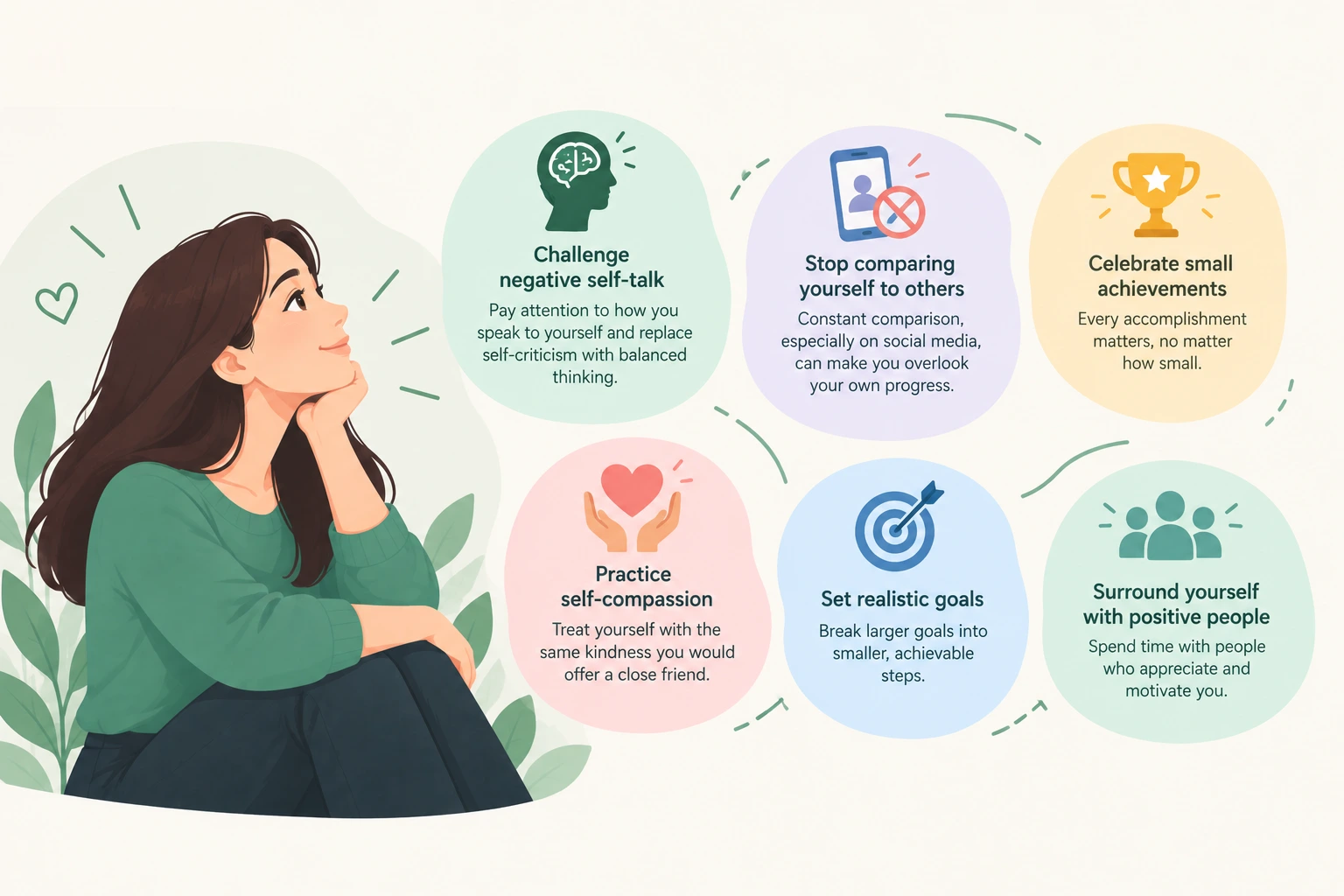
Learning to overcome low self-esteem involves challenging negative thoughts, practising self-compassion, setting realistic goals, celebrating small achievements, and surrounding yourself with supportive people. Professional therapy can also help you develop healthier thinking patterns and build lasting confidence.
Is CBT for low self-esteem effective?
Yes. CBT for low self-esteem is one of the most effective psychological treatments for improving self-worth. It helps identify negative thinking patterns, replace self-critical beliefs with healthier perspectives, and develop practical skills that improve confidence over time.
How can counselling for low self-esteem help?
Counselling for low self-esteem provides a safe and supportive space to explore the causes of self-doubt, understand unhelpful thought patterns, and develop healthier coping strategies. With professional guidance, individuals can improve confidence, strengthen emotional resilience, and build a more positive relationship with themselves.
Low self-esteem is learned - and it can be unlearned, with the right support.

Leave a Comment
We would love to hear your thoughts and experiences.